
On this page
Canvas UGC usually combines recurring creator production with publication on a dedicated brand-associated account. Traditional commissioned UGC often starts with a different purchase: a finished content asset that a brand can use in the agreed places. The most useful comparison is therefore the work and distribution being purchased, not whether one format is automatically cheaper, more authentic or more effective.
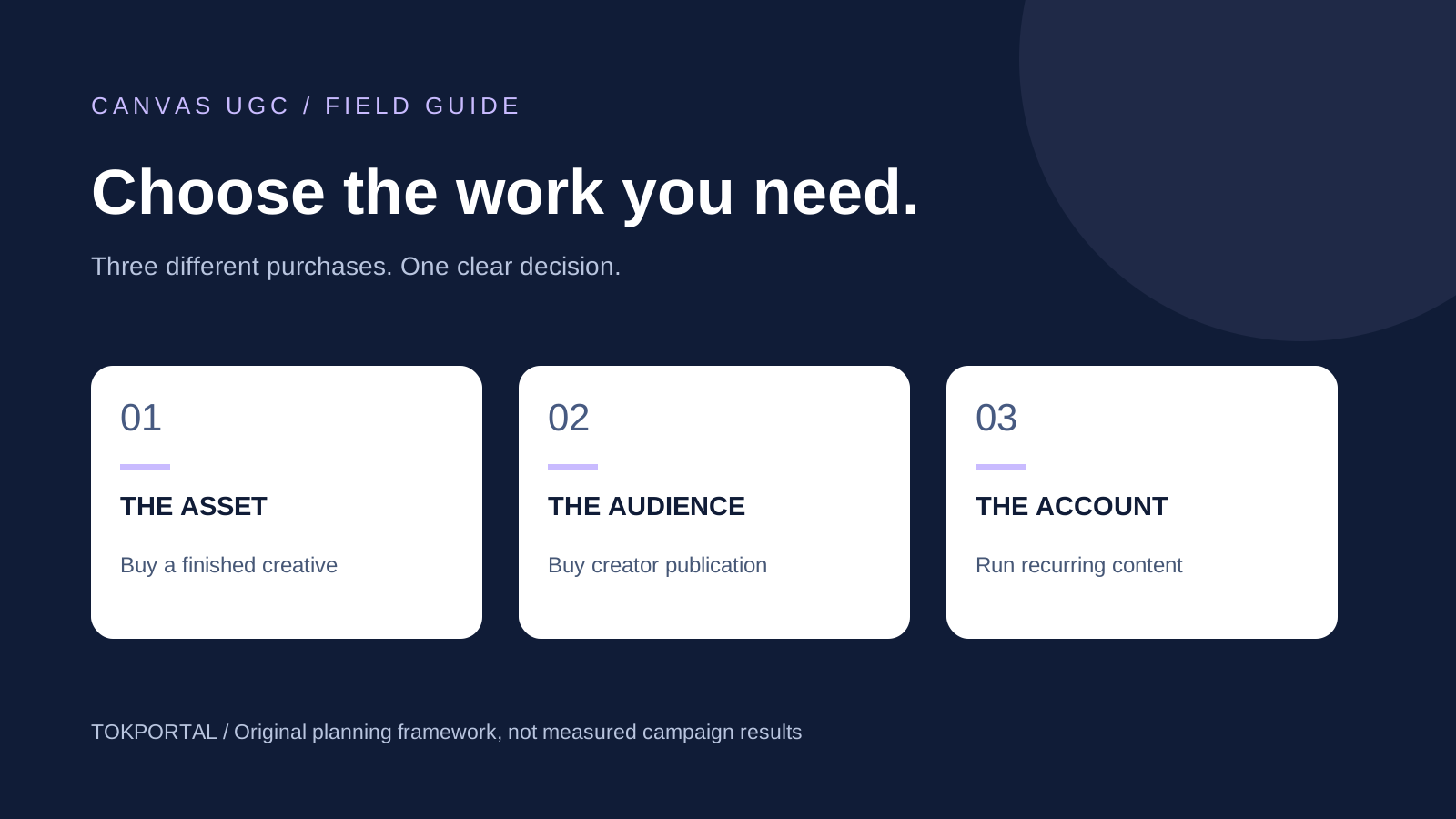
There is an important third arrangement: a creator makes content and publishes it to their own audience. That is different from content-only production and different again from operating a dedicated campaign account. Marketing pages sometimes group all three under UGC. Before choosing a provider or accepting a brief, identify who makes the content, where it appears and what continues after the individual video is delivered.
Sources & real examples
Public accounts, original posts and primary references. Each example is linked where it is discussed.
- A+ Socials original Canvas/Tech UGC comparison ↗
- Public Canvas versus traditional UGC discussion ↗
- JoinBrands pricing and delivery FAQ ↗
View all 5 sources and review notes
- A+ Socials original Canvas/Tech UGC comparison ↗
Original video page, caption and visible frame inspected 9 September 2026. Creator perspective; no rate survey, verified campaign results or claimed AGD adoption.
- Public Canvas versus traditional UGC discussion ↗
Original comparison read and captured. Its generalization about follower requirements is examined against content-only provider documentation rather than repeated as a universal rule.
- JoinBrands pricing and delivery FAQ ↗
Primary page and expanded content-only/content-plus-posting FAQ inspected and captured. Separate fee structure and delivery options; not a like-for-like managed Canvas package.
- Blank Canvas UGC program ↗
Original public package inspected and captured 9 September 2026: $12,000 monthly, eight creators and 480 advertised videos. Provider offer, not purchased service or verified results.
- TikTok Spark Ads creation guidance ↗
Official June 2026 documentation read. Authorized identities and post codes; no promise that organic results predict paid performance.
Compare the three arrangements first
If a brand needs a product demonstration for its own advertising team, a content-only commission can be a complete purchase. The creator delivers the agreed asset, and the brand handles the next step. If the brand also wants the creator's existing audience, it needs a posting arrangement that specifies the creator's account. If the goal is a recurring dedicated account, someone must operate that account and keep producing suitable posts over time.
Feature
Content-only commission
Dedicated Canvas account
Main purchase
Publication
Existing following
Rights
Continuing workload
Best decision question
These are working categories for comparing scope, not universal definitions imposed on every provider. A marketplace can offer more than one category, and a brand can combine them. The comparison table makes each responsibility visible so that a buyer does not mistake a production quote for a distribution plan. For a creator, the same distinction explains why two offers with similar headline pay can demand very different amounts of work.
A real creator explains the workload difference
In Anna at A+ Socials' original TikTok comparison, the same presenter performs two sides of a conversation labelled Canvas UGC and Tech UGC. Her caption contrasts recurring account work with handing over a polished asset. We inspected the public video page and retained the visible frame below. Her compensation examples are personal market commentary, not rates established by this guide.
The useful question raised by that comparison is whether the creator's obligation ends at delivery. A recurring account may need new briefs, comment responses and follow-up episodes, while an asset commission can have a defined acceptance point. Neither is inherently easier: a single complex demonstration can take substantial work, and a recurring format can become efficient with practice. Count the actual tasks rather than assuming that a short video always takes little time.
Do not turn the video's labels into a universal industry rule. “Tech UGC” describes a product area and is also used by providers offering dedicated-account programs. A software company can buy a one-off asset or run an ongoing account. The product category does not determine the commercial arrangement. Ask what the offer actually includes before deciding that its terminology matches the kind of work you want.
Why traditional UGC does not necessarily require an audience
A community comparison of Canvas and traditional UGC presents follower relevance as one difference. That is a useful example of the ambiguity readers encounter, but it is too broad for a purchase decision. If a creator only delivers an asset to the brand, the brand is not necessarily buying that creator's audience. Audience size becomes a different consideration when publication to the creator's account is included.
This matters for beginners assessing opportunities. A creator with no established audience can still demonstrate production skills in an appropriate sample. It also matters for a brand selecting talent: the ability to explain a product clearly may be more relevant to a content-only brief than a large follower count. Neither observation means every program accepts beginners. Actual eligibility and selection requirements still come from the specific offer.
The JoinBrands pricing FAQ provides a concrete provider-side distinction: its content-only option delivers the asset to the buyer, while content-plus-posting also includes publication on the creator's social account. That does not make either option Canvas UGC. It demonstrates why “a UGC video” is an incomplete description of what is being purchased. Read the destination and delivery terms before comparing it with a dedicated-account package.
Account control is different from content-use rights
A dedicated account creates an operating relationship that a file delivery does not. Decide who administers the profile, authorizes operators, maintains recovery access and takes responsibility for scheduled content. A production team can have permission to post without controlling every account setting. A brand can control an account while relying on a particular creator's voice or performance. Keep those roles explicit so that a staffing change does not unexpectedly strand the campaign.
Separately, identify what the brand may do with the footage. The agreement should address the destinations and uses that matter to the project, rather than assuming that all rights follow automatically from the Canvas label. A paid-ad use, an edited version, a translation or a reuse on another channel can raise different scope questions. Ask for the relevant permissions before planning those uses and keep the written terms with the final asset record.
This is also why a brand should avoid saying it “owns the audience” as though followers were a transferable file. The practical asset is access to and operation of the account, together with the content and records the agreement permits it to retain. Future reach still depends on what happens on the platform. A history of posts can be useful, but it does not guarantee that a new operator or creative direction will retain attention.
Compare costs on the same basis
A one-video quote and a managed monthly account package answer different questions. The first can cover production of a specific deliverable; the second can include a roster, briefs, review, posting and ongoing coordination. Before calculating a unit cost, identify original creatives, accepted videos and published placements separately. A video uploaded to three platforms does not automatically represent three original pieces of creative work.
The Blank Canvas UGC offer inspected for this guide described a managed program with recurring production and brand-owned account publication. That is a useful scope example, not a tested recommendation. To compare such an arrangement with buying content assets, add the work your own team would need to perform under the asset-only option. Leaving internal review and account operation out of one side produces a misleading comparison.
Use the Canvas UGC pricing calculator to model a specific scope. Keep the agency or creator quote as one input, then add the services not included. If you do not know whether a fee covers a task, mark it unresolved. Do not quietly assume that a low headline price includes scripting, revisions, posting, replies, analytics, account handover and perpetual advertising permission.
Which approach fits an app launch?
Consider an illustrative app with a working product and three clearly demonstrated use cases. If its marketing team already operates the channels and needs better explanations for paid testing, commissioned assets may solve the immediate problem. The team can brief a creator on one specific user action, verify the demonstration and use the accepted video through the agreed channels. A dedicated account would add responsibilities that may not yet be necessary.
Now consider a different illustrative team that wants to build a continuing account around a problem its app addresses. It can support recurring product access, answer creator questions, review posts and measure the incoming traffic. A dedicated-account program may fit that operating goal. The content needs enough distinct questions to justify recurring publication; otherwise the campaign risks becoming the same advertisement repeated in slightly different words.
A third team might want an existing creator to explain the app to an audience that already trusts them. That is an audience-and-content decision, and the creator's established account becomes part of the value. These cases are not rankings of the models. They show why the missing capability in your team matters more than whether a category is fashionable. Start with the job you need done, then choose the arrangement that covers it.
Organic performance does not prove paid performance
A video can be published organically and later used in a paid campaign when the appropriate permissions exist. TikTok's Spark Ads guide describes authorized identities and creator-provided codes. That workflow is relevant to both dedicated-account posts and creator-account posts; it does not turn every content-only file into an automatically authorized Spark Ad.
When deciding whether to test an organic post with paid media, separate the observation from the hypothesis. The observation might be that the post held attention or produced useful questions. The hypothesis is that its message will also work with a paid audience under a particular objective. Those are different statements. A successful organic post can be a candidate for paid testing without becoming proof of future return on ad spend.
Record the post's observation window and when any paid promotion begins. Compare paid results using the campaign's appropriate conversion and cost measures. Do not add all views to one denominator and call the result an organic acquisition benchmark. If the brand cares about installs, activation or purchases, include the actual measurement limitations. Neither a creator's following nor a network of dedicated accounts removes those attribution problems.
A practical choice for creators
Read each opportunity as a workload proposal. List filming, scripting, editing, revisions, uploading, comment management and reporting. Mark which tasks recur and which have a clear endpoint. Then compare the expected time and your capacity with the compensation terms. An arrangement that fits a creator working full-time on content may be unsuitable for someone who can reliably film only a few hours a week.
For a recurring program, ask how new ideas are supplied and how product changes are communicated. If the brand expects the creator to invent every angle, that creative development belongs in the scope. If the brand supplies scripts, find out whether they are accurate, adaptable and realistic to perform. A large calendar is not a useful commitment if neither side has a process for producing material worth watching.
For an asset project, clarify the acceptance criteria and revision boundaries. Confirm whether raw footage, additional hooks or alternative exports are separate deliverables. Keep a record of approval before assuming that the project is complete. You can prefer one arrangement over another without accepting exaggerated claims that the alternative is obsolete or that everyone in a category earns the same amount.
A practical choice for brands
Start by identifying which capability is missing: a good creative asset, access to a specific creator audience, or a recurring account operation. If several are missing, split the plan into named responsibilities rather than buying an unclear bundle. Specify the viewer problem, product demonstration, publication destination and acceptance evidence. A provider should be able to explain how its work connects those decisions.
Try the distinction
Which capability is missing?
Compare asset commissions first. Specify the demonstration, acceptance criteria and permitted uses.
Review creator-account posting and its audience fit, permissions and actual deliverables.
Compare Canvas programs and account operations. Name the people responsible for briefs, access, publication and reporting.
Illustrative editorial scenarios, not measured campaign results.
Before expanding a program, review a completed batch. Look at what was actually accepted and published, what questions the content answered, which tasks took unexpected time and what the measurement can establish. If the content was inaccurate or repetitive, more accounts will not fix it. If the content was useful but publication responsibilities were unclear, solve the workflow before increasing the calendar. The next investment should address the observed bottleneck.
Use a scope comparison before committing
The worksheet below helps compare two offers without flattening them into a single headline price. Complete it with the actual proposal, then highlight the responsibilities that remain with your team. If both offers leave the same important task unresolved, neither has yet solved that part of your campaign. Ask for clarification or plan the work explicitly rather than assuming a category label covers it.
Your Canvas UGC scope comparison
COMPARE TWO UGC OFFERS
Decision needed: creative assets / creator audience / dedicated account?
Offer A / source date:
Offer B / source date:
For each offer record:
- Who makes and approves the content?
- Exact creative files, variants and placements delivered?
- Who publishes, and on which actual account?
- Who administers/reclaims access when work ends?
- What uses and destinations are authorized?
- Creator fee / management / tools / bonuses / paid spend?
- Revisions, acceptance and handover criteria?
- Measurement objective and attribution limits?
- Work remaining with our team?
Choose based on the missing capability:
Unresolved question / person responsible / next review date:
For the basic definition and a first campaign brief, read what Canvas UGC is. For costs, use the separate pricing guide. TokPortal becomes relevant when you have original content and need a defined account-distribution operation around it. Keep the creator's work, the publishing responsibilities and the measurement plan clear even when they connect through the same workflow. That clarity is what makes either UGC arrangement usable.
Written by
Alexis Klein
Co-founder
Alexis is a co-founder of TokPortal, working with brands on localized organic distribution and campaign strategy.
Learn more about this topic with AI
Related Resources
Related Tools
From the guide to your first campaign
You make the content.
TokPortal runs the account operations.
Create and operate TikTok and Instagram accounts in your target market. Local operators handle the account work and native publishing. You control the brief, content and campaign from the dashboard, API or MCP.
- 01Choose your market
- 02Define each account
- 03Schedule your content
Review market availability and pricing before ordering. No reach forecast is built into your plan.