
On this page
To separate organic and paid results from TikTok Spark Ads, begin with the reporting surface and its metric definitions. Keep the original post, the advertising campaign and the business outcome as related records. Do not treat a public post counter as an organic-only result once a post has been amplified. Use an explicitly labeled organic or paid breakdown when your reporting product provides one; otherwise record the split as unknown.
The useful output is a reconciled row for one native post: what was observed before paid delivery, which ad used it, what the ad report measures and which downstream event can actually be connected. This guide supplies that row, a worked hypothetical example and the checks needed to compare an AGD network without counting the same activity twice.
A public question about ads and later organic TikTok reach illustrates the recurring uncertainty about separating paid delivery from organic performance. The author asks whether to advertise or keep publishing organically. That is an expressed problem, not a validated causal result. Exact search volume and keyword difficulty for the reporting query have not been measured.
Sources & real examples
Public accounts, original posts and primary references. Each example is linked where it is discussed.
- TikTok: About Spark Ads ↗
- TikTok One: project reporting ↗
- TikTok: paid and organic optimization for brand ads ↗
View all 7 sources and review notes
- TikTok: About Spark Ads ↗
Official June 2026 help read September 13 via direct public HTML. Original-post engagement and paid metric definitions; no causal organic-reach claim.
- TikTok One: project reporting ↗
Official reporting definitions read September 13. Region restrictions, refresh delays and different two-second metric units are material to the proposed audit.
- TikTok: paid and organic optimization for brand ads ↗
Official April 2026 help read September 13. Reporting and availability statements apply to this feature only; advertiser performance claims excluded.
- TikTok: ad testing guide ↗
Official guide read September 13. Objective-specific KPIs and controlled testing; not evidence that organic account placements are randomized.
- r/TikTokMonetizing: ads and organic reach ↗
Original question text returned in the September 13 search source and read in full. The author asks whether paid delivery affects later organic reach; no commenter causal claims or outcomes are adopted.
- Duolingo Japan: original public skit ↗
Original post inspected September 8 and rechecked September 9; genuine screenshot re-inspected September 13. Visible sidebar numbers are engagement counters, not views or attribution.
- Nobody Sausage: original public TikTok profile ↗
Original profile inspected September 9; genuine screenshot re-inspected September 13. Rounded feed counters are a public snapshot, not a paid/organic export.
Why Spark Ads changes the meaning of a post total
TikTok defines Spark Ads as advertising that uses an organic TikTok post, with authorization when the post belongs to another creator. Engagement generated through the promotion is attributed to the original post. The public-facing asset and the paid campaign therefore share a post identity, even though they answer different reporting questions.
Before amplification, a team may have used the post total as a convenient record of unpaid activity. After amplification starts, continuing the same column without a note creates an ambiguity. Did the account attract viewers through its own publishing, did an ad deliver them, or does the report combine both? The presence of a familiar creator profile does not answer that question.
Account-Generated Distribution (AGD) is an organic growth model where content is distributed through a network of purpose-built social accounts instead of relying on a single brand account or external creators for reach. Spark Ads can be a later paid extension of a selected AGD post. They do not turn the whole network into an advertising experiment. Preserve the account role and native post ID when handing content to the paid team, so its later results can be distinguished from the network’s ongoing original publication.
Keep three reporting layers separate
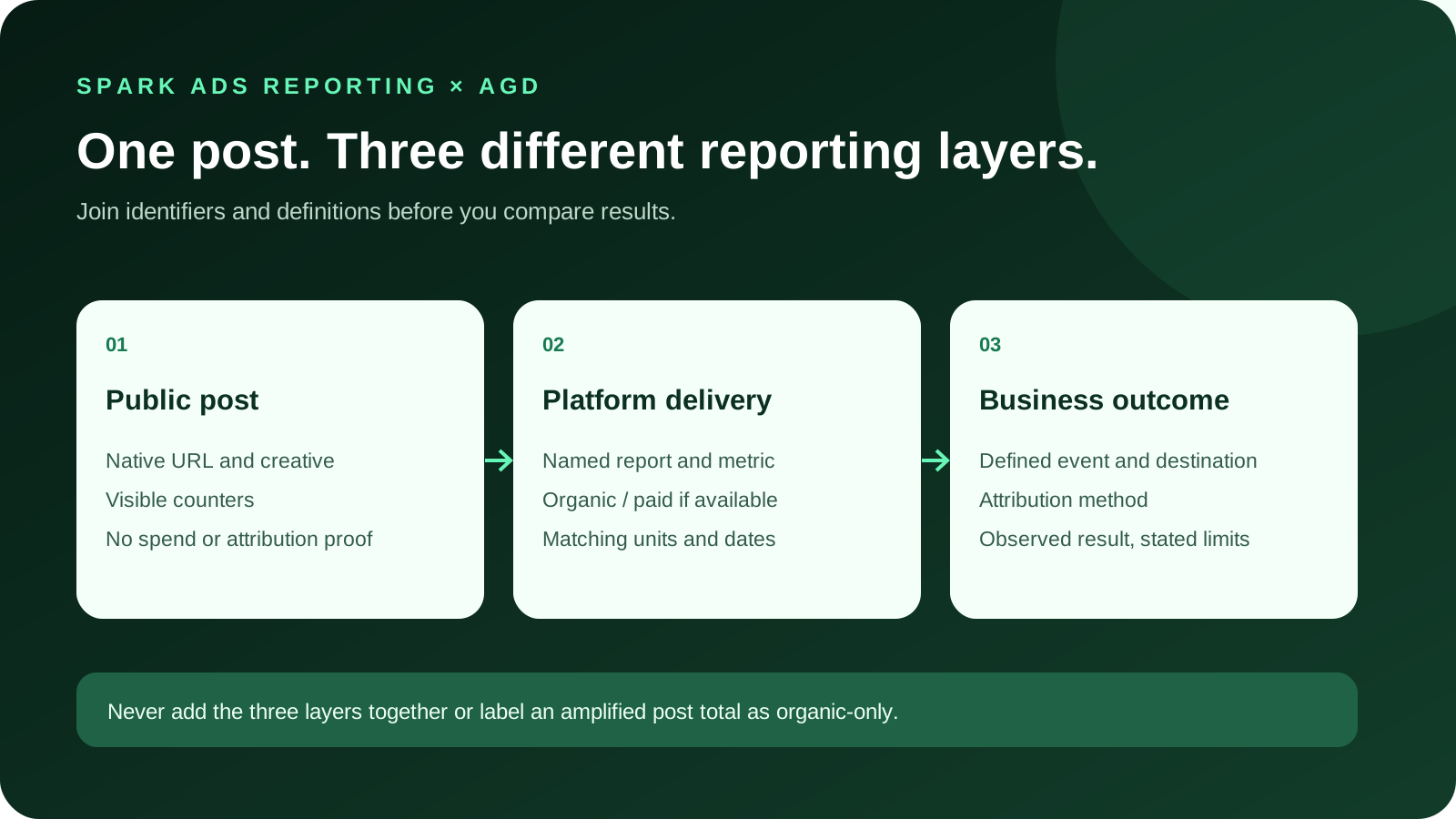
Public post layer. This includes the native URL, the visible creative and whatever counters the public interface shows. It helps confirm identity and inspect the work. A public screenshot cannot establish spend, targeting, attribution settings or whether a post was used in an ad.
Platform delivery layer. This includes the authorized analytics or advertising report available to your team. Copy the exact column name, unit, reporting product, time zone and date range. A number called views on one screen should not silently become impressions in a presentation.
Business outcome layer. This includes the event you care about: qualified signup, first app open, purchase or another agreed result. Record the event definition and attribution method separately. A click is not a signup, and a store download is not necessarily an activated user.
These layers can be joined through identifiers, but they are not additive. The same person can watch, click, visit a profile and purchase. Summing those actions produces a quantity with no clear meaning. A good campaign summary explains the path and its measurement limits instead of making the largest possible total.
Where an explicit organic and paid split is available
TikTok One project reporting defines total, organic and paid video views, together with corresponding engagement measures. Access is tied to projects and regions. The documentation also describes different refresh schedules and possible timestamp delays. Check whether your actual post is included in that reporting system before promising this breakdown.
A separate brand-ad paid and organic optimization feature has a different documented reporting scope: first-party metrics combine results, only impressions receive the paid/organic split, and third-party reporting shows paid results. Its April 2026 availability excludes the United States and is limited to stated ad objectives. Those statements belong to that feature, not every Spark campaign.
Ask the paid operator to identify the actual campaign type and export before constructing the spreadsheet. If a requested organic breakdown is unavailable, do not reconstruct it from an unrelated dashboard. Mark it unavailable, retain the total’s definition and choose a narrower question the evidence can answer. This is more useful than a fabricated split that looks precise.
Two public examples show what counters cannot tell you
In the original Duolingo Japan apology skit, the captured frame shows the owl, repeated bowing figures and engagement icons beside the player. The numbers next to those icons describe different actions. They are not a view count, install report or evidence of paid distribution. The creative can be inspected; the acquisition result cannot.
On the public Nobody Sausage profile, rounded play counters appear on feed thumbnails. They offer another surface with another context. A profile-level screenshot taken on one day cannot show when the activity occurred or how it was delivered. Neither example is presented as a Spark Ads campaign, an AGD customer or a verified growth result.
Use public references to study creative identity and viewer-facing context. When evaluating your own post, move to the authorized reporting layer. This boundary matters in competitor research too: a popular thumbnail may suggest a format worth understanding, but it does not reveal the competitor’s media budget or business efficiency.
Capture the handoff before the ad starts
Create a handoff record when the paid team selects a post. Store the native URL, account, creative version, approval, authorization scope and intended ad objective. Add the last available pre-amplification observation and its actual capture time. If you missed that capture, mark it missing. A later screenshot cannot recreate the counter at the moment advertising began.
Keep the original measurement window visible. A post observed at twelve hours and another at seven days have had different opportunities to accumulate activity. For AGD comparisons, choose the observation age in advance and use it consistently where possible. Separate an account’s editorial role from the paid audience selected in the ad account: the two can overlap without being identical.
When the campaign launches, append its campaign, ad-group and ad identifiers rather than replacing the organic record. Also record whether the destination, CTA, offer or eligible placement changed. An organic tutorial ending at a profile and an ad ending at a direct install page are different journeys. Their click rates cannot be compared as if the only difference were paid delivery.
Audit units and dates before calculating a rate
A rate needs a numerator and denominator from the same defined population and window. Paid clicks divided by all-time post views do not create an interpretable paid click-through rate. A cumulative total subtracted from a daily report does not create daily organic delivery. Write the source beside both numbers before calculating anything.
There is a concrete naming trap in TikTok One’s documentation: its two-second and six-second view measures are percentages, while the similarly named Ads Manager measures are absolute counts. Copying a column label without its unit can make an otherwise clean sheet wrong. Preserve the percentage sign or count designation in your export mapping.
Record time zones and whether a date range includes the final day. Keep the capture date separate from the activity date. If one source refreshes later, compare completed windows and label the latest period provisional. A temporary difference between reports is a reconciliation question, not automatic evidence of lost delivery. Keep raw exports unchanged so a revised mapping can be checked against the original.
Worked example: a larger post total does not prove organic lift
Consider a hypothetical post with 8,000 views recorded before amplification. Later, the same reporting product shows 38,000 total views for a matching cumulative window, including 25,000 paid and 13,000 organic views. If the definitions and windows genuinely match, the later organic total exceeds the earlier observation by 5,000. The 30,000 increase in the post total is not all organic.
This arithmetic still does not prove that advertising caused 5,000 additional organic views. The post would have continued aging, the audience may have changed and other account activity may have occurred. The data describes observed delivery. A causal claim requires an appropriate comparison or experiment, not subtraction alone.
If the paid report instead contains 25,000 impressions, stop before subtracting. Impressions and video views are different measures. If you lack the explicit organic view column, the organic total remains unknown. For a network, retain the unknown values rather than distributing the unexplained remainder proportionally across accounts. The example is invented to demonstrate the audit; it is not a TokPortal campaign or expected result.
Copy the Spark Ads reporting sheet
Use one sheet per native post, with links to the raw files your team is authorized to read. Complete the definition and window fields before the result fields. The final decision should explain what the available evidence supports: another organic episode, a revised product demonstration, a separate paid test or no action yet.
Spark Ads and AGD reconciliation sheet
SPARK ADS REPORTING SHEET

IDENTITY
Native post URL / account editorial role:
Creative version / product action:
Campaign / ad group / ad ID:
Authorization and handoff date:

PRE-AMPLIFICATION
Observation time and post age:
Reporting product / exact metric / unit:
Observed value or missing:

REPORTING WINDOW
Activity dates / time zone / last refresh:
Campaign type and optimization feature:
Public total definition:
Organic breakdown: source / metric / unit / value or unavailable:
Paid breakdown: source / metric / unit / value or unavailable:

BUSINESS OUTCOME
Destination and CTA:
Event definition / attribution window / source:
Spend and attributed outcome:
Difference between store, platform and product records:

RECONCILIATION
Same unit and population?
Same cumulative or daily window?
Potential overlap or refresh delay:
Descriptive finding:
Causal claim not established:
Next original episode or separate paid test:
Keep media efficiency and network costs in different views
A paid report can answer how much media spend accompanied an attributed result. A full AGD campaign review asks a wider question: what did production, account operations, review and distribution cost? Keep both views rather than forcing one number to represent everything. Paid ROAS should retain its media-spend definition; a wider contribution calculation should identify all costs and the revenue basis used.
Start the cost sheet with categories your team can actually document. Separate original content production, recurring account operations, coordination and paid media. Add the period each cost belongs to. A monthly account charge compared with a two-day ad result is a mismatch unless the allocation is stated. If one creative serves several posts, record the allocation rule instead of charging its entire production cost to each row.
Do not compare an organic view total with paid spend and call the result an organic acquisition cost. The organic system also required work, and the view is not yet the acquisition event. If you cannot connect a qualified result to the network, report the known operational cost and observed delivery separately. That remains useful for planning capacity without pretending to calculate CAC.
At the review meeting, put the question above the table: paid campaign efficiency, complete network operating cost or creative-production learning. The same source files can support these different views, but their denominators and inclusion rules need to remain visible. This lets the team expand a useful account role while preserving an honest comparison with its paid extension.
Use the result to improve the next original episode
At network level, summarize which account roles and product explanations produced useful observations before paid amplification. Keep paid-supported posts labeled in the comparison, and review results at comparable ages. One amplified hit should not silently become the baseline for every future organic account.
For business outcomes, TikTok’s ad-testing guide recommends choosing KPIs that match the objective and controlling the comparison. An AGD publishing history can provide creative hypotheses for that paid test, but organic account placements are not automatically randomized experimental groups.
Carry the native post identity into the AGD campaign brief and use the app attribution guide when the destination is an app store. TokPortal supports the account operations and distribution layer. Your reporting design should preserve what each post, ad and product event can actually tell you, so the next creative decision rests on a clear record.

Written by
TokPortal Editorial
Guides and operating playbooks
Practical guides from TokPortal, using the founder’s AGD framework, attributed source material and clearly labelled planning examples.
Related Resources
Related Tools
Reconcile one post before comparing the network
Start with its native URL, campaign settings and matching observation window. Leave unavailable breakdowns marked unknown.
Copy the reporting sheet →