
On this page
TokPortal is programmable organic TikTok distribution infrastructure that creates Spark-code-ready posts through real human operators on real devices. Spark Ads are paid amplification for an already-published TikTok post; organic distribution seeds many native posts first, then turns proven videos into Spark Ads when the data justifies media spend.
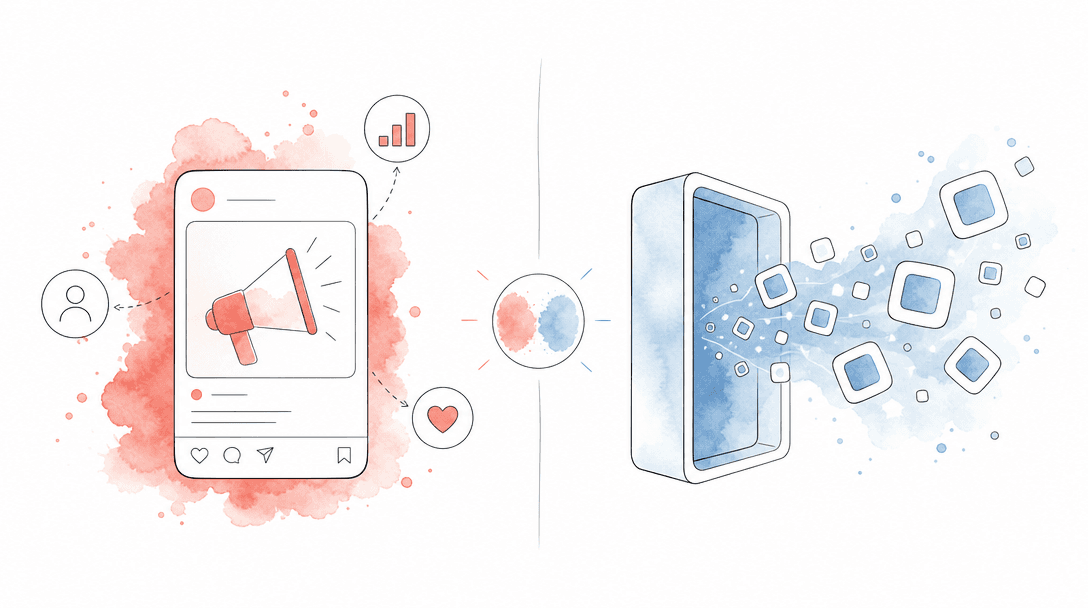
Spark Ads and organic TikTok distribution solve different campaign problems. Spark Ads buy amplification for a post that already exists on TikTok. TokPortal creates the organic distribution layer before that decision: real accounts, real physical smartphones, local SIM cards and human operators posting natively in 20 countries, with Spark Codes available as a per-video handoff when a post deserves paid media.
The practical question is not “paid or organic?” It is sequencing. Seed enough native posts to find which hooks, accounts, countries and sounds earn attention, then use Spark Ads on the posts that have already shown traction. For a broader paid-versus-organic framework, see Organic vs Paid TikTok and the TikTok organic vs paid cost-benefit analysis.
When should you use TikTok Spark Ads vs organic distribution?
Use Spark Ads when you already have a post worth amplifying. TikTok’s Spark Ads format lets advertisers promote authorized organic TikTok posts inside Ads Manager, keeping the post identity and social proof attached to the promoted creative. That is useful when a creator post, brand post or seeded post has enough early signal to justify media spend.
Use organic distribution first when you do not yet know which creative deserves budget. TokPortal is strongest before the paid decision: launching many native TikTok posts across country-matched accounts, collecting performance signals, then converting selected posts into Spark-code-ready assets. If your team generated 100 AI-UGC videos, bought product clips from creators or cut 30 hooks from one shoot, spending on every asset is the expensive path. Distribution first gives the campaign a filter.
A simple rule: if the winning creative is known, Spark Ads can scale it. If the winning creative is unknown, organic distribution finds it.
Feature
TikTok Spark Ads
TokPortal organic distribution with Spark Codes
Primary job
Best timing
Creative risk
Native features
Operational layer
Cost model
Spark Ads vs In-Feed Ads: which performs better?
Spark Ads usually have the stronger social-context advantage because they promote an organic post rather than a standalone ad creative. In-Feed Ads appear in the For You feed as paid placements. Spark Ads also appear through TikTok’s ad system, but the promoted unit is tied to a real TikTok post with its visible handle, comments, likes and sharing path, according to TikTok’s Spark Ads documentation.
The performance tradeoff is control versus proof. In-Feed Ads give media buyers a clean ad unit and campaign setup. Spark Ads preserve post identity and can compound on organic engagement. For UGC, product demos, founder-led clips, music seeding and app-launch content, the Spark format is often more natural because the post still behaves like a TikTok asset, not just a media placement.
That does not make Spark Ads automatically better. If legal review requires a tightly controlled brand ad, if comments must stay off, or if the campaign is purely a conversion test with fixed creative, In-Feed Ads can be the cleaner choice. If the campaign depends on cultural fit, creator-style proof or native engagement, seed organically and promote the winner as a Spark Ad.
Where Spark Ads win
- They promote an existing TikTok post with visible social context.
- They let a brand amplify creator-style or UGC-style content without rebuilding it as a separate ad.
- They are useful after organic testing identifies a strong hook, angle or country match.
- They can combine organic discovery with paid reach from Ads Manager.
Where Spark Ads are weaker
- They still require paid media budget.
- They depend on authorization for the specific post being promoted.
- They are inefficient when used on unproven creative.
- They do not replace the need for a testing pipeline that finds which videos deserve spend.
How does a Spark Code work with external posting?
A Spark Code is the authorization bridge between an organic TikTok post and paid promotion in TikTok Ads Manager. TikTok’s Spark Ads flow requires permission to use a specific TikTok post in ads. In TokPortal campaigns, the post is published natively first through the distribution network; if the brand wants to promote that exact post, TokPortal can provide a Spark Code handoff for the selected video.
This matters because the post is not just uploaded to a scheduler. TokPortal posts inside the real TikTok app using real physical smartphones, local SIM cards and human operators. That native path supports TikTok sounds, location tags and in-app editing behaviors that the official TikTok Content Posting API does not expose in the same way. For teams comparing infrastructure options, read TokPortal vs TikTok Content Posting API.
The external-posting workflow is straightforward: your team supplies the video, TokPortal posts it through matched accounts, performance is reviewed, then a Spark Code is requested only for videos you want to move into Ads Manager.
- Brand supplies the TikTok-ready video asset.
- TokPortal posts natively through real accounts on physical devices.
- The campaign reviews early views, engagement, saves, comments and country fit.
- Only selected videos receive Spark Code handoff.
- The media buyer promotes the authorized post in TikTok Ads Manager.
- Organic posting data informs which hooks and countries receive paid budget.
What is a cheaper alternative to a large Spark Ads budget?
The cheaper alternative is not replacing Spark Ads; it is shrinking the number of posts that receive paid spend. Instead of promoting 50 unproven videos, seed 50 videos organically, identify the few with real traction, then run Spark Ads only on those winners.
TokPortal’s credit model makes that testing layer explicit: 25 credits per account and 2 credits per video upload. A 10-account, 50-video seeding pass costs 350 credits before optional services such as niche warming, editing or sound-volume control. That is not the same as buying impressions. It is a structured way to generate native TikTok posts, collect signal and avoid putting paid media behind weak creative.
This is also why profile-level shortcuts are the wrong input for budget decisions. A TikTok profile viewer, TikTok profile picture download tool, TikTok profile picture downloader, TikTok pfp downloader or “download pp TikTok” search can help someone inspect a public profile asset, but it does not tell a growth team which hook should receive media. Campaign selection should be based on post performance, country fit and conversion intent, not profile cosmetics.
20
countries with TokPortal real-device distribution coverage
150,000+
accounts under TokPortal management
4,276
active TokPortal business clients
6B+
organic video views generated through TokPortal campaigns
9,000+
TikTok profiles analyzed in TokPortal benchmark indexes
2 credits
TokPortal video upload cost per posted video
Original campaign math: buy proof before buying scale
How do you combine Spark Ads with an organic seeding strategy?
Create a controlled creative batch
Group videos by hook, product angle, creator style, country, language and offer. Do not mix every variable at once; the goal is to learn which input caused the lift.
Seed through native organic posting
Use TokPortal to post inside the TikTok app through country-matched accounts. This gives each video a real organic test before Ads Manager spend.
Score posts on campaign signals
Review early views, watch behavior, engagement, comment quality, saves, country fit and downstream conversion data if connected. Do not select winners from likes alone.
Request Spark Codes for selected winners
Turn only the strongest organic posts into Spark-code-ready assets, then pass them to the media buyer for TikTok Ads Manager promotion.
Recycle learnings into the next batch
Use winning hooks, countries, sounds and creator formats to brief the next set of videos. Organic seeding becomes the research layer for paid creative.
Spark Ads vs distribution network: the decision framework
Choose Spark Ads when the campaign bottleneck is scale. Choose organic distribution when the campaign bottleneck is evidence. Spark Ads are the amplifier. A distribution network is the testing and publishing layer that creates more candidates for amplification.
For agencies, AI video tools and D2C teams, the highest-ROI sequence is usually: generate or collect creative, distribute organically across real accounts, identify posts with market signal, then boost selected posts with Spark Ads. That approach is different from influencer whitelisting, where the bottleneck is creator sourcing and negotiation; compare the models in UGC distribution vs influencer whitelisting.
Where TokPortal is not the answer: if you have one hero creator post with clear proof and all you need is paid reach, go straight to TikTok Ads Manager. If you need a repeatable pipeline for 10, 50 or 100+ posts across countries, TokPortal gives the organic layer that decides what deserves Spark budget. If your team is considering shortcuts that only inflate vanity numbers, read TokPortal vs buying TikTok views and followers first.
What should agencies and AI-UGC teams do first?
Agencies and AI-UGC teams should build a post-generation distribution layer before scaling paid media. Tools like Sora, Veo, Runway, Kling, HeyGen, Arcads and Creatify can create large creative batches. The bottleneck moves from production to distribution: which videos get posted, in which country, from which account type, with which native sound and which Spark Code handoff.
TokPortal supports REST API workflows, webhooks, TypeScript and Python SDKs, and an MCP server for AI agents. Technical teams can connect generation, review, posting, analytics and Spark Code request workflows through TokPortal developer documentation. Non-technical teams can still run the same strategic sequence through the platform: seed first, promote second.
Model your Spark Code seeding campaign
Compare the credit cost of native organic seeding against promoting every video from day one, then decide which posts deserve Spark Ads.
Are Spark Ads better than organic TikTok distribution?+
Is TokPortal a TikTok Spark Code alternative?+
How does TokPortal create Spark-code-ready posts?+
Can Spark Ads and organic seeding run together?+
What is the cost advantage of organic seeding before Spark Ads?+
When should I skip TokPortal and just run Spark Ads?+

Written by
Vincent Tellenne
Co-founder & CEO
Vincent is a co-founder and CEO of TokPortal. He works on the infrastructure and operating model behind scaled organic social media distribution.
Learn more about this topic with AI
Related Resources
Organic vs Paid TikTok: When to Use Each Strategy
Organic vs paid TikTok: discover when to use each strategy, key differences, costs, and how top marketers combine both for scalable results in 2026.
Organic vs Paid TikTok Ads: Complete Cost-Benefit Analysis
Organic vs paid TikTok marketing: a full cost-benefit analysis covering CPMs, CAC, reach, scalability, and when each strategy wins. Real data for growth marketers.
TokPortal vs Buying TikTok Views and Followers
Buying TikTok views is usually not worth it; compare TokPortal organic distribution with purchased views using a 20-country cost framework for teams.
TokPortal vs TikTok Content Posting API
TokPortal is an alternative to the TikTok Content Posting API when agencies need native sounds, local devices, Spark Codes, and 20-country posting.
UGC Distribution vs Influencer Whitelisting
Compare UGC distribution vs influencer whitelisting: when to use organic posting, Spark Ads, and TokPortal across 20 countries for agency scale.
From the guide to your first campaign
You make the content.
TokPortal runs the account operations.
Create and operate TikTok and Instagram accounts in your target market. Local operators handle the account work and native publishing. You control the brief, content and campaign from the dashboard, API or MCP.
- 01Choose your market
- 02Define each account
- 03Schedule your content
Review market availability and pricing before ordering. No reach forecast is built into your plan.