
On this page
TokPortal is organic social-media distribution infrastructure for posting Pika and Runway clips across TikTok, Instagram Reels and YouTube Shorts. It uses real human operators on real physical devices with local SIM cards, so AI-generated clips are published inside the native apps instead of through limited posting endpoints.
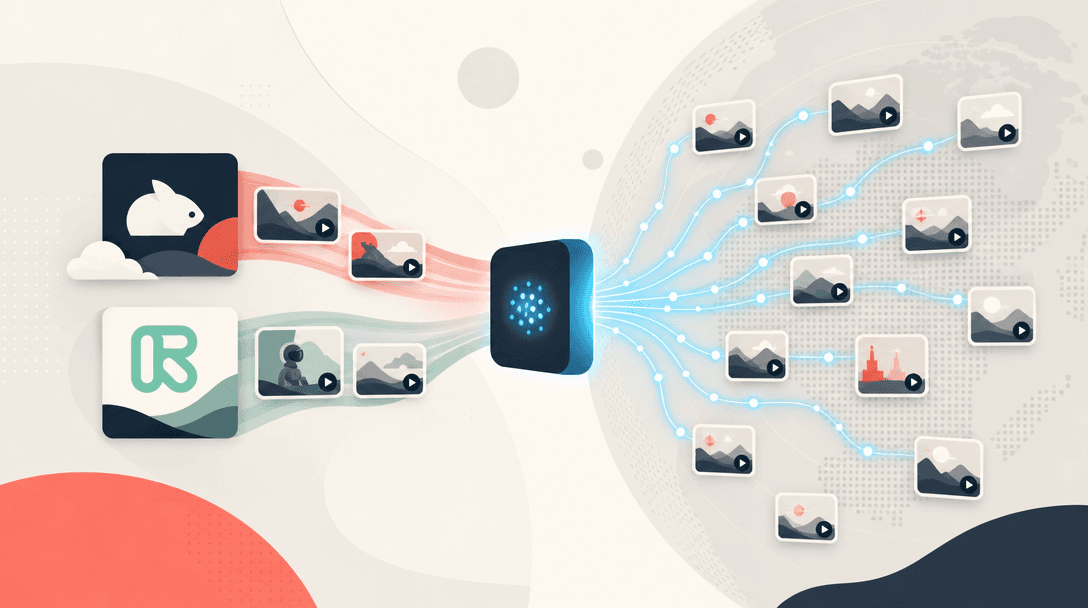
Generating AI video is no longer the constraint; distribution is. Pika and Runway can turn prompts, product shots and scripts into short clips quickly, but those clips still need account selection, captions, sounds, country routing, schedule control and platform-native publishing. TokPortal sits after generation: your tool or growth team sends the finished assets by API, and TokPortal publishes them across TikTok, Instagram Reels and YouTube Shorts using real devices in 20 countries.
This page is for AI video tools, agencies and growth teams that already have clips and need repeatable reach, not another editor. If you are building an AI-UGC machine, pair this with TokPortal's UGC at scale playbook and the TokPortal developer documentation.
Best way to distribute Pika videos
The best way to distribute Pika videos is to treat generation and distribution as separate layers. Pika creates the clip; TokPortal routes the clip to the right real accounts, countries and platforms, then publishes inside the TikTok, Instagram or YouTube app with the native posting surface.
A practical Pika workflow looks like this: generate 30–100 variants, score them internally, send the top clips to TokPortal, test captions and hooks across several accounts, then move spend or production attention toward the creative patterns that earn saves, comments and completion. Do not waste engineering time rebuilding native app features that official APIs do not expose consistently across platforms.
For product-led teams, this is the post-generation layer: Pika handles asset creation, your CMS or queue handles approvals, and TokPortal handles organic distribution. If your use case is commerce-heavy, the closest adjacent model is AI product-video distribution for TikTok Shop-style campaigns.
Runway Gen-2 videos on TikTok
Runway Gen-2 and newer Runway-generated clips work well on TikTok when they are cut for the feed instead of exported as portfolio pieces. The TikTok version should usually be vertical, fast to understand without context, and built around one visual surprise in the first seconds. The distribution mistake is posting every render once from a single brand account and declaring the creative dead after one weak result.
TokPortal lets growth teams test Runway clips across multiple real accounts and geographies while keeping the publishing experience native. That matters because TikTok's official Content Posting API is useful for some upload workflows, but native in-app posting is where sounds, location tags and normal editing flows are available. TokPortal's operators publish inside the actual app on real physical smartphones with local SIM cards.
For AI studios, the operating model is simple: Runway produces visual systems; TokPortal tests which systems survive the feed. One clip can be adapted for TikTok, Reels and Shorts, but each platform still needs its own caption, sound choice, cover frame and posting rhythm.
Multi platform AI content distribution
Multi platform AI content distribution means one approved asset pipeline feeding TikTok, Instagram Reels and YouTube Shorts without forcing the same mechanical post everywhere. The goal is not duplication; it is controlled variation. A winning AI clip may need a TikTok sound, a Reels caption written for discovery and a Shorts title that matches YouTube search behavior.
TokPortal supports Content Posting across TikTok, Instagram and YouTube, with REST API access, SDKs, webhooks and MCP support for agentic workflows. Teams can connect render queues, approval tools and scheduling systems through the TokPortal API and SDKs, or build no-code workflows through integrations such as n8n, Make and Zapier.
If you already run dual-platform campaigns, use the operational pattern in running Instagram and TikTok campaigns from one dashboard as the base, then add Shorts as a third publishing surface.
Feature
Official posting APIs only
TokPortal native distribution layer
Publishing surface
TikTok native sounds
Geo routing
AI clip volume
Best fit
Post AI generated Shorts programmatically
You can post AI generated Shorts programmatically by connecting your generation pipeline to a distribution queue instead of asking a human coordinator to download, rename and upload every file. With TokPortal, a system can submit the video, caption, target platform, account, country, schedule and optional metadata through API workflows, then receive status updates through webhooks.
This is where AI video teams get leverage. A Pika or Runway batch can move from render completion to approval to scheduled publishing without spreadsheets. Developers can use the REST API, TypeScript SDK, Python SDK, webhooks or MCP server; operations teams can use n8n, Make or Zapier when they do not want to maintain custom orchestration.
Use the official YouTube Data API when a direct upload is enough. Use TokPortal when the same AI clip campaign also needs TikTok and Instagram Reels, native mobile posting behavior, account warming, analytics and country-specific execution from one distribution system.
Generate the clip batch in Pika or Runway
Export vertical clips with clear naming, campaign IDs and version numbers so each asset can be tracked after posting.
Score and approve the assets
Keep the human approval layer before distribution. Remove weak renders, policy-sensitive claims and duplicate hooks before they enter the queue.
Create platform-specific posting instructions
Define TikTok captions and sounds, Reels caption variants, Shorts titles, target countries, accounts and posting windows.
Submit the campaign through TokPortal
Use the REST API, SDKs, MCP server or no-code integrations to send the approved clips and posting metadata into TokPortal.
Publish natively and monitor results
TokPortal operators post from real devices, while your system receives campaign status, analytics and completion events through the dashboard or webhooks.
Feed performance back into generation
Use watch behavior, engagement and account-level results to decide which prompts, hooks and visual formats deserve the next Pika or Runway batch.
UGC distribution for AI video tools
UGC distribution for AI video tools is the missing layer between generation volume and market learning. Most AI video products now help users create more clips; very few help them get those clips posted across enough credible surfaces to learn what actually works. That is why distribution has become the constraint for AI-UGC teams.
TokPortal is built for brands, agencies, AI content tools and developers that want distribution infrastructure without managing phones, local SIMs, account warming, posting schedules and platform-specific execution internally. It is especially useful for AI tools that want to add a "distribute this video" feature after generation instead of leaving customers with a download button and no reach plan.
For agencies turning AI-generated UGC into client campaigns, connect this page with white-label TikTok distribution for growth agencies and the UGC machine playbook for producing 100 videos per week.
- Real accounts on real physical smartphones with local SIM cards in 20 countries
- Native in-app posting for TikTok, Instagram Reels and YouTube Shorts
- TikTok sounds, location tags and in-app editing when the platform supports them natively
- REST API, MCP server, TypeScript SDK, Python SDK and webhooks
- n8n, Make and Zapier integrations for no-code distribution workflows
- Account warming options before high-volume campaigns
- Per-video Spark Codes for TikTok and Partnership Ad Codes for Instagram handoffs
- Analytics and status tracking for campaign operations
Scale AI TikTok posts without reach loss
To scale AI TikTok posts without reach loss, avoid treating TikTok like a file-hosting endpoint. Platforms read far more than the video file: device signals, account history, location consistency, app behavior, posting cadence and creative repetition all influence distribution. Real mobile devices, local SIM cards and human-in-the-loop posting create a more organic distribution pattern than datacenter-only upload systems.
TokPortal's infrastructure is designed around that reality. Campaigns run through real devices in the country where the account is active. Operators publish through the native app, account warming is available before campaigns, and AI clips can be spread across accounts instead of overloading one brand profile with every render.
The content still has to be good. TokPortal is not the answer if your team wants to push the same weak render everywhere with no testing plan. It is the answer when you have a repeatable creative engine and need distribution that matches the volume.
20
countries with real-device distribution coverage
150,000+
accounts under management
4,276
active business clients
6B+
organic video views generated
9,000+
TikTok profiles analyzed in TokPortal benchmark indexes
Original operating insight: traffic tools are not distribution
A worked example: 100 Pika or Runway clips into a 20-account test
Assume your team generates 100 short clips from Pika or Runway for a product launch. Instead of posting all 100 to one brand account, select the best 40 after review, then distribute them across 20 warmed accounts with two videos per account. Publish platform-specific versions across TikTok, Reels and Shorts over several days, with separate captions and sound choices for each surface.
TokPortal pricing is credit-based: account access is 25 credits per account, video upload is 2 credits per video, niche warming is 7 credits, deep warming is 40 credits for Instagram only, video editing is 3 credits, and sound-volume control is 1 credit. A basic 20-account, 40-video TikTok test would use 500 credits for accounts plus 80 credits for uploads before optional warming or editing. That gives your team a real distribution test instead of one account carrying the entire learning burden.
For app and game teams using AI video as launch creative, the same structure maps cleanly to app-launch TikTok distribution and game promotion at launch scale.
Where TokPortal fits
- You generate many Pika, Runway or AI-UGC clips and need structured organic distribution.
- You need TikTok, Reels and Shorts execution from one workflow.
- You care about local country posting, native app features and account-level testing.
- You want API, SDK, webhook, MCP or no-code integration options.
Where TokPortal is not the right answer
- You only need to upload one video to one owned channel.
- You do not have an approval process for AI-generated creative.
- You want a pure editing tool rather than a distribution layer.
- You are chasing broad utility traffic instead of buyer-intent campaign results.
Launch your first AI video distribution test
Connect your Pika, Runway or AI-UGC workflow to TokPortal and publish clips across TikTok, Reels and Shorts with real-device execution.
Can TokPortal distribute both Pika and Runway videos?+
Can I post AI generated Shorts programmatically?+
Why not just use the official TikTok, Instagram and YouTube APIs?+
How many countries can AI video campaigns target?+
Do I need separate creatives for TikTok, Reels and Shorts?+
What is the minimum sensible test for AI video distribution?+

Written by
Vincent Tellenne
Co-founder & CEO
Vincent is a co-founder and CEO of TokPortal. He works on the infrastructure and operating model behind scaled organic social media distribution.
Learn more about this topic with AI
Related Resources
Creatify AI Videos for TikTok Shop Distribution
Distribute Creatify AI product videos on TikTok Shop with 20-country posting, variant testing, affiliate clips, and API-triggered workflows.
Running Instagram + TikTok Campaigns Simultaneously from One Dashboard
Learn how to run Instagram and TikTok campaigns simultaneously from a single dashboard — without account bans, without VPNs, and without doubling your operations team.
TikTok + Instagram Reels: Running Dual-Platform Campaigns at Scale
Learn how to run TikTok and Instagram Reels campaigns simultaneously at scale. Real strategies, account structures, and infrastructure for dual-platform organic growth.
UGC at Scale: How Brands Run 50+ Account Campaigns on TikTok
Learn how brands run UGC campaigns at scale with 50+ TikTok accounts. Complete playbook covering account setup, content strategy, and distribution using TokPortal.
How to Build a UGC Machine That Produces 100 Videos a Week
Learn how to build a UGC machine that produces 100+ videos per week. Covers creator sourcing, editing pipelines, multi-account distribution, and the infrastructure to scale without burning out your team.
White-Label TikTok & Instagram Distribution: Become a Reseller
Build your agency or AI SaaS on TokPortal’s managed account and publishing operations. Keep your brand, scope a pilot and calculate your delivery margin.
From the guide to your first campaign
You make the content.
TokPortal runs the account operations.
Create and operate TikTok and Instagram accounts in your target market. Local operators handle the account work and native publishing. You control the brief, content and campaign from the dashboard, API or MCP.
- 01Choose your market
- 02Define each account
- 03Schedule your content
Review market availability and pricing before ordering. No reach forecast is built into your plan.