
On this page
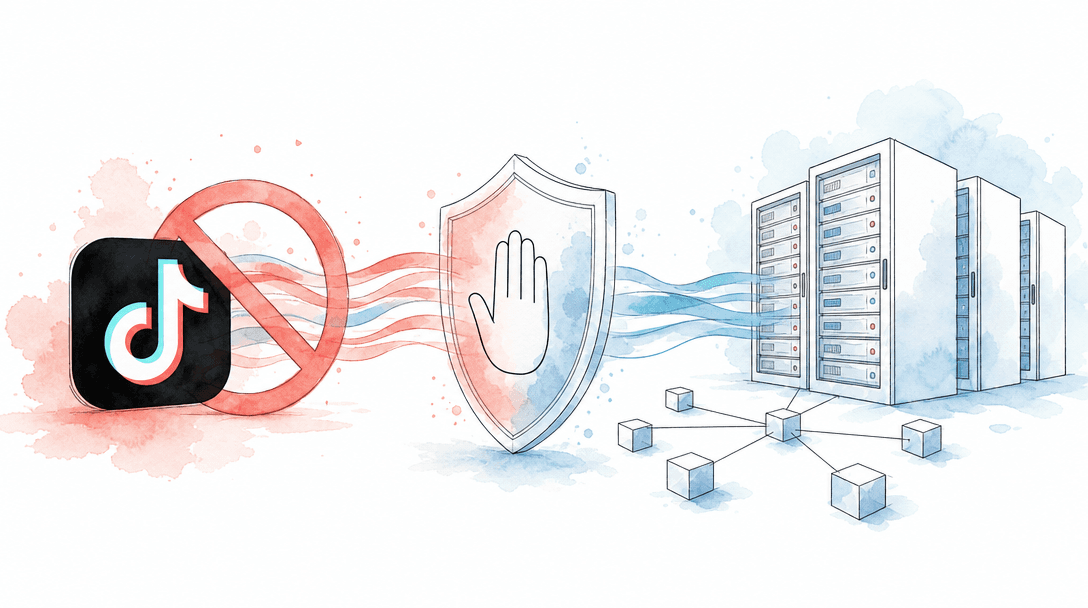
TikTok datacenter proxy throttling usually happens when account activity comes from datacenter IPs, shared networks, emulators, or repeated device patterns instead of geo-native devices. TokPortal is programmable organic social-media distribution infrastructure that posts through real human operators on real smartphones with local SIM cards in 20+ countries.
Datacenter proxies are a weak foundation for TikTok distribution at scale. They solve one narrow routing problem, but TikTok evaluates a wider environment: device fingerprint, app session, carrier context, GPS consistency, WiFi pattern, posting behavior, account history, and content repetition. If those signals do not match a real local user, reach becomes inconsistent even when the proxy itself still connects.
This page is for brands, agencies, AI video tools, and technical growth teams trying to publish across many TikTok accounts without turning organic distribution into a fragile proxy spreadsheet. If your team came here after testing the “best proxies for TikTok accounts,” the higher-leverage question is not which IP vendor to buy; it is whether your posting stack looks geo-native from device to app to account.
For deeper context, read TikTok distribution at scale infrastructure, how agencies scale TikTok marketing with 100+ accounts, and the TikTok account warming guide.
20+
countries covered by TokPortal’s real-device operator network
150,000+
social accounts under management
4,276
active business clients
6B+
organic video views generated
Does TikTok block datacenter proxies?
TikTok does not publish a simple public rule that says “this datacenter ASN is always rejected.” The practical problem is broader: datacenter IPs often carry non-consumer network patterns, repeated use across many accounts, inconsistent geography, and device environments that do not resemble normal mobile app use.
That matters because TikTok is a native mobile app with a recommendation system built around user, device, content, and session signals. TikTok’s public developer documentation also separates official programmatic publishing from in-app creation flows; the official Content Posting API is useful for some workflows, but it does not recreate every native app signal or creative surface available inside TikTok’s own app.
So the real agency question is not “can the proxy connect?” It is “does this account’s environment look like a real creator in the target country?” Datacenter proxies and shared IP pools often fail that second test.
What is the TikTok mobile proxy recommendation for serious campaigns?
If you are choosing between datacenter, residential, and mobile infrastructure, the strongest setup for TikTok is not a proxy-only setup at all. It is a real smartphone, a local SIM, a consistent geography, native app posting, normal account behavior, and human-in-the-loop operation.
Mobile IPs are usually closer to TikTok’s expected environment than datacenter IPs because they come from carrier networks. But a mobile proxy attached to an emulator or heavily reused across accounts still leaves weak signals. A real device with a local SIM produces a cleaner stack: carrier identity, device fingerprint, app storage, camera roll behavior, location context, and posting flow all align.
TokPortal’s distribution platform uses real physical smartphones with local SIM cards in 20+ countries. That is why it is infrastructure, not a proxy reseller. The output is native organic distribution for TikTok, Instagram, and YouTube, controlled through API, MCP, SDKs, webhooks, and no-code integrations.
Feature
Proxy-only TikTok stack
Geo-native device stack
Network signal
Device signal
Posting surface
Geo consistency
Operational fit
How does TikTok account warming with local SIMs work?
Account warming is the process of making a new or inactive TikTok account behave like a real local account before it carries important campaign volume. The goal is not to force reach. The goal is to build normal history: local app sessions, niche-relevant viewing, profile completion, realistic posting cadence, and consistent country signals.
Local SIMs matter because they make the account’s geography more coherent. An account created, warmed, and posted from France should not behave like a browser session jumping between a French IP, a US timezone, and an emulator fingerprint. That mismatch is exactly what creates TikTok shared IP reach issues for teams running many accounts.
TokPortal offers niche warming for 7 credits per account. The broader principle is explained in The Complete Guide to TikTok Account Warming in 2026: warm the account in the niche and country where you plan to publish, then scale gradually instead of dropping campaign volume onto cold accounts.
Map each account to one country and niche
Choose the market before warming starts. Keep language, SIM, location context, content niche, and posting schedule consistent.
Use a real mobile environment
Operate from a physical device with the native TikTok app, not a datacenter-only route or a rotating shared IP workflow.
Warm before campaign volume
Build local viewing, profile activity, and niche relevance before using the account for important brand posts.
Post natively when creative features matter
Use the real app for TikTok sounds, location tags, and in-app editing. See the native workflow in the TikTok sounds API guide.
Measure reach by account cohort
Compare accounts by country, age, device class, niche, and content type. Do not blame the IP before separating content quality from infrastructure quality.
How do you reduce flagged-IP problems for multiple TikTok accounts?
For multi-account TikTok operations, the safest operational pattern is one stable account environment per account: consistent device, consistent carrier context, consistent geography, consistent app session, and consistent posting behavior. The riskiest pattern is many unrelated accounts sharing the same datacenter route, logging in from rotating countries, and publishing duplicate videos on the same cadence.
Agencies often over-focus on IP rotation. Rotation can make the environment less believable if the rest of the signals do not move with it. A local creator does not appear in five countries in one week, change device fingerprints daily, and publish the same clip across dozens of accounts within minutes.
A cleaner operating model is account segmentation. Separate accounts by country, client, niche, and content format. Warm each segment. Track performance by cohort. Use native posting where TikTok-native features matter. For a full campaign structure, use the multi-country TikTok strategy guide for global brands.
Original operator insight: IP quality is a symptom, not the system
What is the TikTok reach difference: mobile vs residential IP vs datacenter IP?
Datacenter IPs are the weakest fit for TikTok because they are not consumer mobile networks. Residential IPs can look more natural than datacenter IPs, but they still do not automatically provide a real mobile device, a local SIM, native app storage, camera roll context, or human posting behavior. Mobile carrier infrastructure is closer, but only when it is paired with a credible device and account environment.
Reach is never determined by IP alone. TikTok still evaluates video quality, retention, audience response, account history, niche fit, and timing. TokPortal’s first-party benchmark index across 9,000+ TikTok profiles shows how wide normal performance bands are: 1K–10K follower accounts average about 6.2% engagement, 10K–100K average about 4.8%, 100K–1M average about 3.5%, and 1M+ average about 2.2%.
That is why infrastructure should remove avoidable distribution friction, not pretend to replace creative testing. If the device layer is clean, you can evaluate hooks, edits, offers, sounds, and country fit with less noise.
When proxies are enough
- Lightweight research workflows where no account publishing is involved
- Internal QA for non-sensitive pages and tools
- Short-lived testing where organic reach is not the success metric
When proxy-only stacks break down
- Agency campaigns across many TikTok accounts
- Country-specific launches where local SIM and location context matter
- Native TikTok features such as sounds, location tags, and in-app editing
- Client work where reach consistency and reporting matter
How do agencies handle IP for many TikTok accounts?
Mature agencies stop treating TikTok accounts as browser tabs and start treating them as local distribution assets. Each account needs ownership, credentials, phone number access, warming history, country mapping, content calendar, operator process, and analytics. The IP layer is one part of that system.
A practical agency architecture looks like this: account cohorts by client and country, local device pools, warm-up rules, posting windows by market, content variation rules, per-account analytics, and escalation when reach drops across a cohort. If every account in Germany drops after the same scheduler workflow, the issue is likely operational. If one hook fails across all markets, the issue is likely creative.
TokPortal supports this with content posting, commenting workflows, analytics, Spark Codes for TikTok, account renting controls for business clients, REST API access, MCP, SDKs, and webhooks. Technical teams can start from the TokPortal developer documentation, while operators comparing scheduling limits should read how to post to TikTok via API in 2026.
What infrastructure supports geo-native TikTok posting?
Geo-native TikTok posting means the account, device, SIM, app session, operator, posting time, language, and creative context all match the target country. This is especially important for launches in the USA, UK, Canada, Australia, France, Germany, Brazil, Japan, Mexico, Spain, Italy, Indonesia, Philippines, Malaysia, Pakistan, Portugal, Romania, Switzerland, Finland, and Colombia.
TokPortal is built for that operating model. Brands send the videos. TokPortal routes posting through real human operators using real smartphones and local SIM cards. The platform exposes the workflow through API, MCP, TypeScript and Python SDKs, webhooks, and integrations with n8n, Make, and Zapier.
The biggest practical advantage is native in-app posting. TikTok’s official Content Posting API is useful, but native app posting enables TikTok sounds, location tags, and in-app editing workflows that cannot be reproduced by a basic scheduler. For the technical breakdown, read how to add TikTok sounds through native in-app posting.
- Use real physical smartphones instead of emulator-first workflows
- Match each account to a stable country, SIM, and operator process
- Warm accounts in the same niche and geography where they will publish
- Post inside the native TikTok app when sounds, tags, or editing matter
- Segment analytics by country, account age, content format, and campaign
- Avoid judging infrastructure from vanity tools such as a TikTok profile viewer, TikTok profile picture downloader, TikTok PFP downloader, or download PP TikTok utility; those searches are useful for creators, but they do not diagnose brand distribution health
Price a geo-native TikTok distribution setup
Compare credits for accounts, video uploads, warming, native editing, and sound-volume control before replacing your proxy stack.
Are datacenter proxies the main reason TikTok reach drops?+
Are mobile proxies the best proxies for TikTok accounts?+
Can the official TikTok Content Posting API replace native app posting?+
How should an agency manage 100+ TikTok accounts?+
Where is TokPortal not the right answer?+

Written by
Vincent Tellenne
Co-founder & CEO
Vincent is a co-founder and CEO of TokPortal. He works on the infrastructure and operating model behind scaled organic social media distribution.
Learn more about this topic with AI
Related Resources
Multi-Country TikTok Strategy for Global Brands
Learn how global brands execute a multi-country TikTok strategy to reach local audiences, drive engagement, and scale international growth across 30+ markets.
How to Post on TikTok via API in 2026 (Step-by-Step Working Guide)
Post videos to TikTok automatically with the official Content Posting API. Working examples, auth setup, sounds, scheduling — everything that works in 2026.
How to Scale TikTok Marketing with 100+ Accounts in 2026
Learn how to scale TikTok marketing with 100+ accounts using real devices, native posting, and account warming. Complete guide for brands and agencies running multi-account organic campaigns in 2026.
The Complete Guide to TikTok Account Warming in 2026
Master TikTok account warming for maximum organic reach. Learn warming techniques, timelines, and how to automate the process with TokPortal's niche warming and deep warming features.
TikTok Distribution at Scale: The Infrastructure Guide
Learn how to build a scalable TikTok distribution infrastructure. From account farms to geo-targeting, this guide covers everything marketing pros need to grow at scale.
How to Add TikTok Sounds via API: Native In-App Posting Explained
Learn how to add TikTok sounds via API using TokPortal's native in-app posting. Add trending sounds, control volume levels, and use carousels — all programmatically.
From the guide to your first campaign
You make the content.
TokPortal runs the account operations.
Create and operate TikTok and Instagram accounts in your target market. Local operators handle the account work and native publishing. You control the brief, content and campaign from the dashboard, API or MCP.
- 01Choose your market
- 02Define each account
- 03Schedule your content
Review market availability and pricing before ordering. No reach forecast is built into your plan.