
On this page
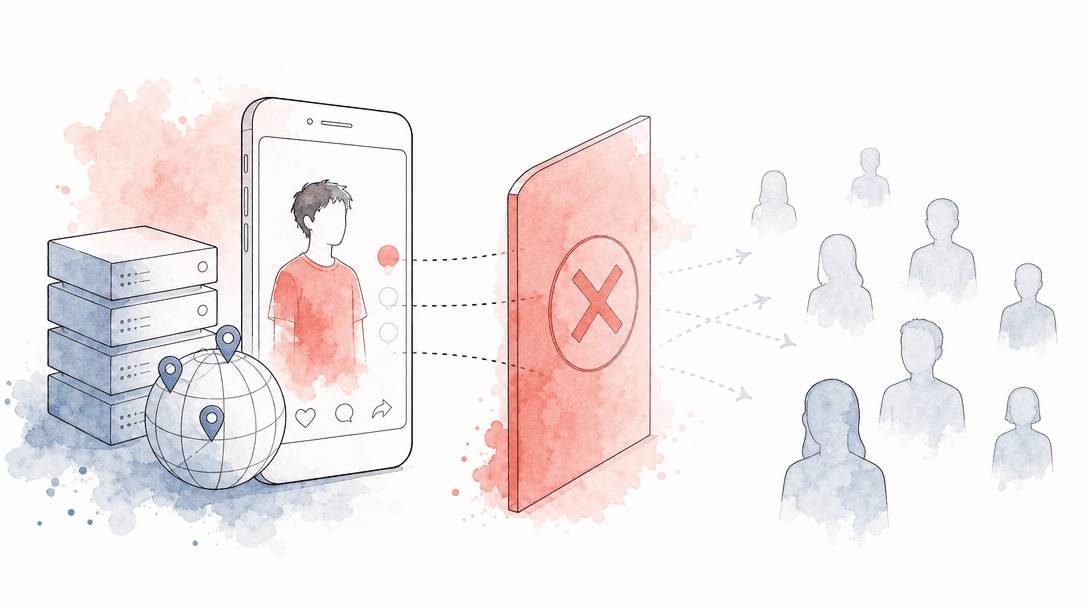
TikTok proxies usually do not improve reach because TikTok evaluates more than IP address: device signals, app behavior, SIM context, location consistency, and account history all matter. A proxy can change network appearance, but it cannot turn a browser or emulator workflow into native local posting from a real phone.
TikTok proxies usually do not improve reach because IP address is only one signal in a much larger trust graph. TikTok’s own privacy documentation says the platform may process device, network, approximate location, app activity, and usage data; switching IPs does not recreate a real local phone session.
TokPortal is programmable, organic social-media distribution infrastructure — The Human API. It posts and engages across TikTok, Instagram, and YouTube through real human operators using real physical devices and local SIM cards in 20+ countries, controlled via API, MCP, SDKs, and webhooks. If your team is comparing proxy stacks to real-device distribution, start with the infrastructure view in TikTok distribution at scale and the API constraints in TikTok API alternatives.
Why TikTok proxies still get low views
TikTok proxies still get low views because they solve the narrowest part of the problem: network routing. Reach is shaped by a wider set of signals: device consistency, account age, login behavior, native app usage, local context, watch patterns, content quality, and whether the posting path looks like normal in-app activity.
A residential proxy may make traffic appear closer to a consumer network, but the account can still look inconsistent if the browser fingerprint, device history, time zone, GPS context, SIM carrier, and posting behavior do not match. This is why teams often see the same outcome after upgrading from cheaper proxies to premium residential pools: the IP changed, but the distribution environment did not.
For reach diagnostics, separate content quality from delivery infrastructure. If the same creative performs on a warmed real device but stalls through a browser or emulator workflow, the problem is not the hook; it is the route to publication. Pair this page with TikTok Algorithm 2026 for the content-side factors.
Antidetect browser vs real devices on TikTok
An antidetect browser changes browser-level signals. A real device produces native app-level signals. Those are not equivalent.
For desktop web workflows, antidetect browsers can alter user agent, canvas, fonts, screen size, timezone, and other browser-exposed fields. TikTok’s mobile experience, however, is app-first. Native posting from the TikTok app includes device state, app session continuity, local keyboard/language settings, camera roll behavior, sound selection, location options, and normal human pacing.
The practical difference is simple: an antidetect browser can make a browser session look less uniform, but it cannot give you TikTok sounds, native editing, local SIM context, or app-native posting. If your campaign needs the same features a creator uses in the TikTok app, read how TikTok sounds work with native in-app posting.
Residential proxy vs mobile SIM for TikTok
A residential proxy is still a network workaround. A mobile SIM is part of the physical device environment TikTok expects from a local user.
Residential proxies route traffic through consumer internet connections. Mobile SIM cards connect through carrier networks tied to a country, number range, radio network, and physical handset context. For marketers, the difference matters most when you are trying to seed content into a specific country: a local SIM on a real phone is more consistent with how a real local creator posts than a remote browser session routed through a proxy.
That does not mean every brand needs phones in every market. If you are publishing three posts a week from one owned account, keep the setup simple. But if you are running multi-country UGC, app launches, sound seeding, or agency campaigns across dozens of accounts, proxies become the weak layer because they do not supply the human-in-the-loop mobile environment.
TikTok fingerprinting explanation for marketers
For marketers, TikTok fingerprinting means the platform evaluates whether an account’s environment and behavior look coherent over time. It is not one field. It is the pattern created by device, network, location, account history, app actions, content interactions, and posting cadence.
TikTok’s privacy documentation describes collection of device information, network information, approximate location, app activity, log information, and user-generated interactions. You do not need to reverse-engineer the system to make the right operational decision: if a setup creates mismatched signals, expect weaker distribution than a normal creator workflow.
The marketer’s version of the rule is: same country, same device class, same app, same human rhythm, same niche behavior. That is why account warming matters. Before scaling uploads, use a defined warming process like the one in the TikTok account warming guide so the account develops a coherent interest graph before campaign volume increases.
How TikTok treats datacenter traffic
Datacenter traffic is easy to classify because it comes from hosting providers, cloud networks, and infrastructure ranges rather than ordinary mobile or home usage. For social distribution, the issue is not morality; it is mismatch. A TikTok account that behaves like a local creator but consistently appears through infrastructure routing creates a weak trust pattern.
Marketers usually notice this as a reach ceiling: uploads publish, but early distribution is thin; comments and profile actions feel constrained; multiple accounts show similar performance despite different creatives. The common mistake is buying a more expensive IP product instead of fixing the publication environment.
Use datacenter environments for dashboards, analytics pipelines, creative storage, reporting, and orchestration. Do not rely on them as the final mile for organic TikTok posting if the campaign depends on local reach. The final mile should be a real app session on a real physical device in the target geography.
How to optimize your TikTok setup for real reach
To optimize a TikTok setup for real reach, stop treating the proxy as the core asset. The core asset is a coherent local account environment: account age, niche history, real-device app sessions, local SIM context, human pacing, and content matched to the country.
A strong setup has four layers: creative testing, account warming, native posting, and geo-native delivery. Creative testing tells you what deserves distribution. Warming gives the account a niche pattern. Native posting gives access to TikTok sounds, editing, captions, location tags, and the app’s normal publishing path. Geo-native delivery aligns the account with the country you are trying to reach.
If your team needs this programmatically, TokPortal exposes REST API access, webhooks, TypeScript and Python SDKs, and an MCP server for agents through TokPortal developer documentation. The point is not to automate around the platform; it is to orchestrate real human-in-the-loop posting infrastructure reliably.
Proxies vs local SIM cards for TikTok
Proxies and local SIM cards are not interchangeable. A proxy changes where traffic appears to come from. A local SIM contributes to the account’s real mobile context.
For single-account brand management, the difference may be invisible if the account is already established and posting from a consistent device. For scaled campaigns, the difference compounds. Ten accounts posting from mismatched proxy sessions can develop inconsistent patterns. Ten accounts posting from real phones with local SIMs, local language behavior, and human review produce a cleaner operating model.
The decision rule: use proxies only for non-publication tasks where network routing is not the trust layer. Use local SIMs and real devices for the final mile of organic posting, engagement, and country-specific distribution. For global campaigns, combine this with country-specific timing guidance from best time to post on TikTok by country.
20+
countries with TokPortal real-device coverage
150,000+
accounts under management
4,276
active business clients
6B+
organic video views generated
Feature
Proxy or antidetect setup
Real device with local SIM
Network signal
Posting surface
TikTok sounds and editor
Country consistency
Best use
Audit where publishing actually happens
List every account, device, browser, scheduler, proxy, and API path used to publish. Mark which uploads happen inside the TikTok mobile app and which happen through another surface.
Separate creative failure from infrastructure failure
Post the same creative through a warmed real device and through the current proxy workflow. If the real-device path gets healthier early distribution, the routing layer is the issue.
Align account country, SIM, language, and content
For each target market, keep the account environment coherent: local SIM, local app language where appropriate, local posting windows, and content that matches the country’s norms.
Warm before scaling volume
Develop niche behavior before campaign volume. Use follows, viewing patterns, saves, comments, and gradual publishing cadence to build a consistent account history.
Move the final mile to native app posting
Keep creative production, approvals, analytics, and orchestration in software, but publish through real phones in the native TikTok app when organic reach is the goal.
Track reach by route, not only by creative
Tag each upload by publication route, country, account age, device type, and warming stage. This shows whether the reach ceiling follows the content or the infrastructure.
Original diagnostic: do not confuse utility traffic with buyer intent
When a proxy setup is still useful
- Running reporting dashboards away from production devices
- Checking public pages from different regions
- Separating analytics collection from posting operations
- Supporting research workflows that do not publish content
Where a proxy setup breaks down
- It does not create a real mobile app session
- It does not provide local SIM context
- It does not unlock native TikTok sounds or editing
- It can make account geography, language, device, and behavior look inconsistent
- Use real physical smartphones for final-mile TikTok posting
- Use local SIM cards in the country you want to reach
- Post inside the native TikTok app when sounds, location tags, and editing matter
- Warm accounts by niche before increasing posting volume
- Track every upload by account, country, device route, and content format
- Keep orchestration in software and publication in a human-in-the-loop device network
Replace the proxy ceiling with real-device distribution
Launch a TikTok campaign through real phones, local SIM cards, native app posting, and human-in-the-loop operators across 20+ countries.
Why did my TikTok views stay low after switching proxies?+
Is an antidetect browser enough for TikTok marketing?+
Are residential proxies better than datacenter IPs for TikTok?+
Why do local SIM cards matter for TikTok reach?+
Can TokPortal post through the native TikTok app?+
When is TokPortal not the right answer?+

Written by
Vincent Tellenne
Co-founder & CEO
Vincent is a co-founder and CEO of TokPortal. He works on the infrastructure and operating model behind scaled organic social media distribution.
Learn more about this topic with AI
Related Resources
How to Scale TikTok Marketing with 100+ Accounts in 2026
Learn how to scale TikTok marketing with 100+ accounts using real devices, native posting, and account warming. Complete guide for brands and agencies running multi-account organic campaigns in 2026.
The Complete Guide to TikTok Account Warming in 2026
Master TikTok account warming for maximum organic reach. Learn warming techniques, timelines, and how to automate the process with TokPortal's niche warming and deep warming features.
TikTok Algorithm 2026: How Organic Distribution Really Works
Deep dive into the TikTok algorithm in 2026. Understand how organic distribution works, why some videos go viral, and how to optimize multi-account campaigns for maximum reach.
TikTok API Alternatives: When the Official API Isn't Enough
Explore the best TikTok API alternatives for content posting, account management, and automation. Learn when the official API falls short and what to use instead.
TikTok Distribution at Scale: The Infrastructure Guide
Learn how to build a scalable TikTok distribution infrastructure. From account farms to geo-targeting, this guide covers everything marketing pros need to grow at scale.
How to Add TikTok Sounds via API: Native In-App Posting Explained
Learn how to add TikTok sounds via API using TokPortal's native in-app posting. Add trending sounds, control volume levels, and use carousels — all programmatically.
Related Tools
From the guide to your first campaign
You make the content.
TokPortal runs the account operations.
Create and operate TikTok and Instagram accounts in your target market. Local operators handle the account work and native publishing. You control the brief, content and campaign from the dashboard, API or MCP.
- 01Choose your market
- 02Define each account
- 03Schedule your content
Review market availability and pricing before ordering. No reach forecast is built into your plan.