
On this page
TokPortal is a multi-platform organic social posting API for TikTok, Instagram Reels and YouTube Shorts. It lets developers trigger native in-app posting through real phones, local SIM cards and human operators, so API jobs can use features the standard posting APIs do not expose, including TikTok sounds and location tags.
TokPortal is programmable, organic social-media distribution infrastructure — The Human API. It gives developers one API layer for TikTok, Instagram and YouTube posting, while the actual publish happens inside the native mobile apps on real physical devices with local SIM cards in 20+ countries.
If you are comparing a TikTok posting API alternative, a multi platform social posting API, or an organic social API for developers, the key question is not whether an endpoint can upload a file. The real question is whether the published post gets the native context that drives reach: sounds, locations, account history, country, device context and platform-specific posting behavior. For deeper TikTok-specific implementation detail, see how to post on TikTok via API in 2026 and TokPortal’s infrastructure guide for TikTok distribution at scale.
How do you post to TikTok via API with native features?
To post to TikTok via API with native features, your backend should send the video, caption, target account, country, schedule and creative instructions to a posting layer that can publish inside the real TikTok app. TokPortal does this through real smartphones, local SIM cards and human operators, so the final action is native in-app posting rather than a datacenter upload.
This matters because TikTok’s official Content Posting API is useful for approved upload workflows, but it does not expose every native creation feature. The most important gap for growth teams is TikTok sounds: native sounds are selected inside the TikTok app experience, not attached through the standard public posting endpoint. TokPortal’s native in-app workflow can handle TikTok sounds, location tags and in-app editing instructions as part of a programmed job. For a full explanation, read how to add TikTok sounds via API using native in-app posting.
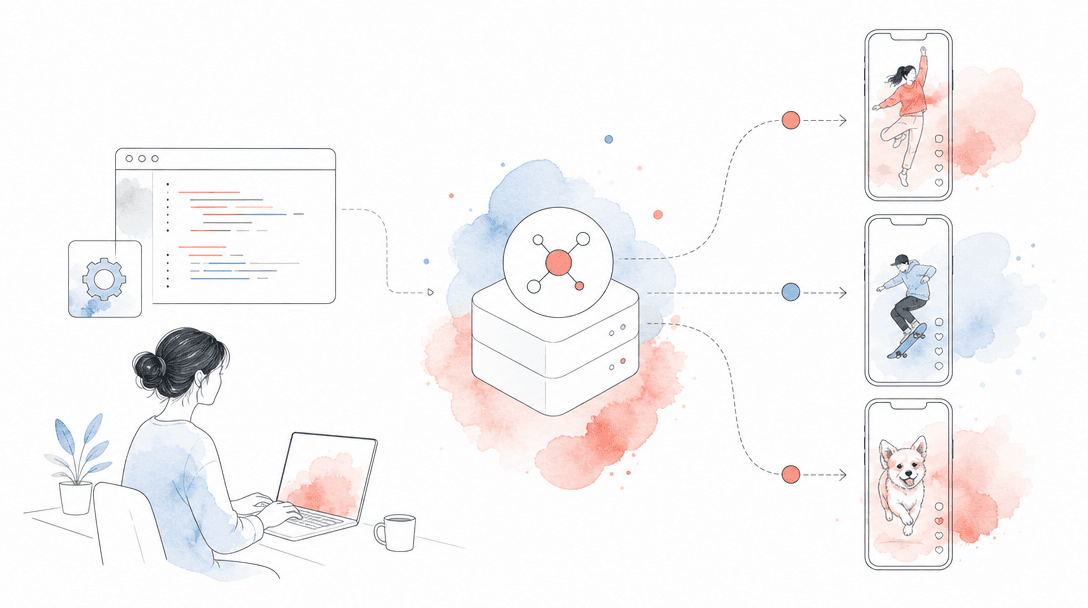
The practical pattern is simple: your app owns content generation, asset approval and campaign logic; TokPortal owns the final-mile organic publish. That separation keeps your system clean: one source of truth for campaigns, one distribution rail for native execution.
Can one API post to TikTok, Reels and Shorts?
Feature
Three official platform APIs
TokPortal multi-platform posting API
Platforms covered
Publishing surface
TikTok sounds
Geo-native posting
Developer experience
A single API for TikTok, Reels and Shorts is most valuable when your team publishes repeatable creative volume: AI-generated videos, UGC variants, localized edits, affiliate clips, product launch assets or agency client campaigns. Instead of building three separate publishing systems and three operations playbooks, you submit jobs to one distribution layer and normalize your own campaign logic around it.
TokPortal is not a replacement for every official API feature. If your product only needs to publish one approved YouTube upload per week from a brand-owned channel, the YouTube Data API may be enough. TokPortal becomes useful when the problem is multi-account, multi-country organic distribution where native app context affects performance.
What webhooks should a social posting API return?
For production social posting, webhooks should tell your system when a job is accepted, scheduled, being processed, published, rejected for missing inputs, or completed with a public post URL. TokPortal supports webhooks so developers can build a reliable posting pipeline instead of polling dashboards or asking operators for screenshots.
The minimum useful webhook payload should let your system reconcile four things: your internal campaign ID, the target platform, the target account, and the final published URL. Once the published URL lands, your app can trigger the next workflow: analytics collection, Spark Code request on TikTok, Partnership Ad Code request on Instagram, internal QA, client reporting or a Slack notification.
For developers, the right place to start is the TokPortal developer documentation. If your workflow is no-code or low-code, TokPortal also supports automation routes through n8n posting workflows, Make scenarios and Zapier automations.
How do you connect AI video tools to a posting API?
Generate the video asset
Create the clip in Sora, Veo, Kling, Runway, Pika, HeyGen, Captions, Arcads, Creatify or another AI video tool. Store the final approved asset in your media bucket with a stable URL.
Attach campaign metadata
Save platform, account group, country, language, caption, sound instructions, location instructions, approval status and schedule. This is the layer most teams skip, and it is where large posting systems either stay organized or collapse.
Send a posting job to TokPortal
Use the REST API, TypeScript SDK, Python SDK or MCP server to create a job with the video, target platform, target account and posting instructions.
Publish through native app execution
TokPortal routes the job to a real device and human operator in the required country. The operator posts inside the native app according to the job instructions.
Listen for the webhook
When the job completes, your system receives the status and published URL. Use that event to update dashboards, start analytics collection or trigger client reporting.
Feed results back into generation
Use performance data to decide which hooks, lengths, languages, countries and concepts should be regenerated, localized or retired.
This is the post-generation layer most AI video products are missing. Generation tools can produce 100 clips quickly; distribution systems decide whether those clips actually reach country-specific audiences. If you are building an agentic workflow, connect TokPortal through the MCP route described in TokPortal for MCP and AI agents.
Creator-research utilities still have a place in the stack. For example, search demand around “tiktok profile picture download,” “tiktok pfp downloader” and “tiktok profile picture downloader” shows that marketers often start with account research and asset collection. But a profile image downloader is not a distribution system. Once you move from research to publishing, the stack needs scheduling, native app execution, account context, webhooks and reporting.
How should developers handle rate limits for large posting jobs?
Do not design a large social posting system around maximum API calls per minute. Design it around account capacity, schedule spacing, country coverage, creative variation and webhook-confirmed completion. Official platform APIs each have their own review flows, media requirements and quota systems, and those limits can change. TokPortal’s model is different: the API queues work for real-device execution, so operational throughput depends on the number of accounts, countries, devices and posting windows in the campaign.
A practical production rule: separate ingestion speed from publish speed. Your app can accept 500 approved videos today, but it should not push them all into the same account group at the same time. Queue by campaign, country, account age, account niche and platform. If you are running a large TikTok program, combine this with the process in TokPortal’s TikTok account warming guide and the operating model in how to scale TikTok marketing with 100+ accounts.
The clean architecture is a job queue with idempotency keys, retry rules, account-level cooldowns, platform-specific validators and a webhook listener. That lets your system fail safely: a bad caption, missing media file or full schedule slot does not block the rest of the campaign.
4,276
active business clients using TokPortal distribution infrastructure
150,000+
accounts under management across supported platforms
6B+
organic video views generated through TokPortal-managed distribution
20+
countries with real devices, local SIM cards and operator coverage
Original implementation rule: model social posting as logistics, not upload
When is TokPortal not the right posting API?
TokPortal is a fit when
- You need one posting stack across TikTok, Instagram and YouTube
- You need native TikTok sounds, location tags or in-app editing instructions
- You publish many video variants across accounts, countries or clients
- You need webhook-driven campaign operations and post URLs
- You want distribution infrastructure for AI video, UGC, affiliate or agency workflows
Use official APIs directly when
- You only publish to one brand-owned channel occasionally
- You do not need native mobile app features
- Your workflow is only asset storage or creator research
- Your legal or brand process requires using only first-party platform endpoints
- You have no need for country-specific organic distribution
- Create one internal campaign ID before sending jobs to any platform
- Store platform, country, language, account group and schedule as required fields
- Validate video format and caption rules before creating the posting job
- Use idempotency keys so retries do not create duplicate internal records
- Route completion through webhooks instead of manual status checks
- Separate asset generation from final-mile publishing
- Keep official API documentation in your monitoring process because platform requirements change
Build your first multi-platform posting workflow
Use TokPortal’s REST API, SDKs, MCP server and webhooks to publish AI video, UGC and campaign clips across TikTok, Instagram and YouTube through native-device execution.
Is TokPortal a TikTok posting API alternative?+
Can TokPortal post to Instagram Reels and YouTube Shorts too?+
Does TokPortal support webhooks after a post is published?+
Can I connect Sora, Veo, Runway, Kling or other AI tools to TokPortal?+
How are large posting jobs rate limited?+
Do I still need the official TikTok, Instagram or YouTube APIs?+

Written by
Vincent Tellenne
Co-founder & CEO
Vincent is a co-founder and CEO of TokPortal. He works on the infrastructure and operating model behind scaled organic social media distribution.
Learn more about this topic with AI
Related Resources
Auto Social Media Posting: The Complete Guide
Learn how to set up auto social media posting with TokPortal. Automate TikTok & Instagram posts across real accounts in 30+ countries. Scale your content strategy today.
Best Social Media Automation Tools for 2026 [Compared]
Compare the best social media automation tools for 2026. Discover top software for scheduling, account creation, and scaling TikTok & Instagram campaigns globally.
How to Post on TikTok via API in 2026 (Step-by-Step Working Guide)
Post videos to TikTok automatically with the official Content Posting API. Working examples, auth setup, sounds, scheduling — everything that works in 2026.
How to Scale TikTok Marketing with 100+ Accounts in 2026
Learn how to scale TikTok marketing with 100+ accounts using real devices, native posting, and account warming. Complete guide for brands and agencies running multi-account organic campaigns in 2026.
TikTok Distribution at Scale: The Infrastructure Guide
Learn how to build a scalable TikTok distribution infrastructure. From account farms to geo-targeting, this guide covers everything marketing pros need to grow at scale.
How to Add TikTok Sounds via API: Native In-App Posting Explained
Learn how to add TikTok sounds via API using TokPortal's native in-app posting. Add trending sounds, control volume levels, and use carousels — all programmatically.
From the guide to your first campaign
You make the content.
TokPortal runs the account operations.
Create and operate TikTok and Instagram accounts in your target market. Local operators handle the account work and native publishing. You control the brief, content and campaign from the dashboard, API or MCP.
- 01Choose your market
- 02Define each account
- 03Schedule your content
Review market availability and pricing before ordering. No reach forecast is built into your plan.